



Categories

The Internet Association of Australia Ltd (IAA) expresses its disappointment that the Australian Communications and Media Authority (ACMA) has rejected the Telecommunications Consumer Protections Code (the Code), describing the decision as a missed opportunity to strengthen consumer safeguards through effective co-regulation.
While not entirely unexpected, IAA notes this decision appears to be influenced by misguided assertions regarding the mandatory and enforceable nature of the Code, and the role of the co-regulatory framework.
“The TCP Code was never voluntary. It was already binding on industry, and with the anticipated passage of the Telecommunications Amendment (Enhancing Consumer Safeguards) Bill 2025 currently before Parliament, would have become directly enforceable,” said Narelle Clark, CEO.
IAA emphasised that the Code represented a significant advance in consumer safeguards, with the benefit of being developed by industry participants with direct operational and technical expertise in telecommunication networks to ensure safeguard measures would remain feasible and practicable.
“We are keen to review the ACMA’s detailed reasoning for the rejection,” Clark said, noting that some of the issues cited by the ACMA such as network outages and Triple Zero failures which have undermined consumer confidence in the industry and seemingly precipitated the rejection, are already subject to direct regulation, and cautioned against the assumption that a shift away from co-regulation would necessarily improve outcomes.
“The final version of the Code had already gone to considerable lengths to address the ACMA’s stated concerns, even to the point that many industry participants considered the obligations heavily onerous. The rejection, without clear and comprehensive justification creates uncertainty as to what additional measures are being sought, and on what basis.”
Looking ahead, IAA is committed to engaging constructively in the development of the replacement standard. As part of this process, IAA emphasises the need for inclusive and meaningful consultation.
“It is essential that all stakeholders work collaboratively to deliver a framework that benefits consumers and supports a sustainable and competitive industry. Recent consultation processes affecting the telco industry, and not necessarily by the ACMA, have at times been rushed, sometimes allowing only a period of 1-2 weeks to respond to key changes. For a reform of this magnitude, consultation must be genuine and must allow for thorough participation actively including the breadth of industry.”
“The Australian Telecommunications Alliance was subject to intensive consultation process requirements in its review of the Code, including requirements to publish summaries of stakeholder feedback, and providing public responses to feedback. We would expect the same level of transparency from the ACMA as a matter of regulatory best practice.”
IAA stressed the increasing regulatory pressures for smaller telecommunications providers.
“We are hearing consistently from smaller providers that the cumulative regulatory burden is becoming unsustainable. There is a real risk that the increasing regulatory settings are unintentionally pushing smaller players out of the market, which cannot be in the consumer interest. We need a regulatory framework that both protects consumers and ensures smaller providers can continue to operate in the market, thereby preserving genuine choice for consumers, and access to local providers who understand their needs.”
Under the current Code, there are also exemptions for niche providers meaning that while the spirit of compliance is well adhered to, cases where the Code is irrelevant means those providers haven’t had to comply to the same extent. Introducing new compliance obligations will add cost, largely to business customers which will in turn have flow on cost impacts to the broader community.
IAA also expressed compressed timelines for compliance as a key concern disproportionately affecting smaller providers.
“Even with the final version of the revised Code, members had expressed grave concerns about the proposed implementation timelines. We sincerely hope that this is up for re-consideration as part of the consultation process. Small providers, who may comprise as few as one or two staff, simply don’t have the capacity to divert their limited personnel to implement extensive changes within short periods, or the ability to absorb these costs. Regulators also need to recognise that telco providers are often facing multiple, concurrent compliance deadlines.”
As a representative body of small to medium sized internet service providers, IAA commits to representing its membership who form an underrepresented but disproportionately affected sector of industry in this consultation on a replacement standard.
IAA also noted that this once again raises the concept of telecommunications as an essential service which is not supported by corresponding legislation or well accepted definitions.
“We certainly agree that communications is a vital part of daily life but the concept of ‘essential services’ carries certain legislative implications that aren’t currently in place for the telecommunications sector. There needs to be widespread comprehensive discussions about what it means for telecommunications to be formally recognised as an essential service, and the costs of delivering services at that level,” said Clark.

Well, here we are in 2026!
With this sweltering summer half over already, we look to the list of things we have in the pipeline this year: a suite of events where we’ll visit communications history museums, more upgrades to get 400G ports everywhere, and hopefully polishing off our network automation efforts soon. Some of you will have already seen the benefit of roll-back capability and route server integration, which are super useful, I’m sure. We’ve recently also completed rearranging our content services to improve access and keep the deluge of Google content flowing your way, and activated a new POP at NextDC’s S2.
Like many of you, we’ll also have to lift our compliance game with the new security requirements landing later this year. We’ve been managing our risk and reporting it to our Board for quite some time, but having to certify our level of compliance will be a challenge, one I’m sure our Members will be sympathetic to. We’re also sorting out some training to ensure that our Members have the best opportunity to be compliant with the Domestic, Family and Sexual Violence standard that came into being last year. You’ll find more detail in this newsletter item on a practical, cost-effective approach to supporting compliance, including shared training and consultation costs across the Membership.
Another big event for us will be to join our brothers and sisters across the ditch as they celebrate 10 years of NZIX! We remain close partners to their success with us continuing to operate their peering exchanges and admin systems for them. It’s been a fascinating journey watching them grow to where they are today.
Happy peering!
Narelle
Question from the desk
Each newsletter, I will pose a question to Members, because your perspective is important. Please email me with your thoughts and opinions. Over to you:
In the era of risk compliance – which model have you chosen to certify with, and why?
Last month marked 10 years since we became the Internet Association of Australia.
Back in January 2016, our community was growing well beyond Western Australia. With the successful launch of NSW-IX, momentum building nationally, and NZIX taking shape, it became clear our name needed to reflect who we really were.
Under President Tom Berryman, the Association proposed a change from the Western Australian Internet Association (WAIA) to the Internet Association of Australia (IAA).
- We had the logo.
- We had the domain.
- We had the vision.
What we needed was Member support.
At a well-attended Special General Meeting in Perth, Members overwhelmingly backed the change, reflecting our evolution from a WA-centric organisation to one with national reach and purpose.
Who can say what the next decade will bring?
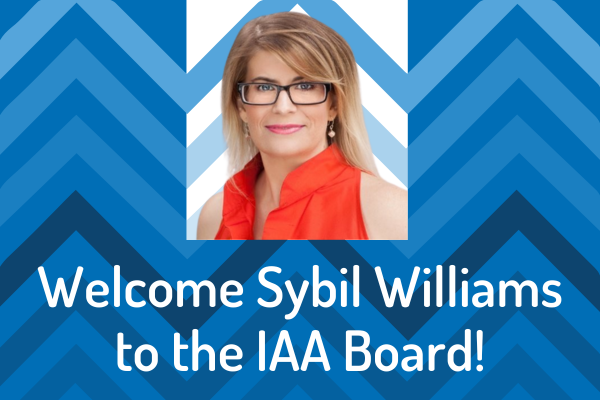
Please join us in warmly welcoming Sybil Williams to the IAA Board. Following the Board Planning Retreat in November, Sybil was appointed as a director of the Association. She took up the appointment to assist the Board and staff, bringing a strategic and market-facing perspective to support the Association’s advocacy, growth, and long-term direction.
Sybil brings more than 20 years’ experience in marketing, communications, and strategy, working with technology, telecommunications, and purpose-led organisations. She is the Founder of Atomic Tangerine, where she advises boards and executive teams on strategy, marketing, brand positioning, and stakeholder engagement.
As we look to strengthen the Association’s market position, improve engagement with Members and pursue sustainable growth opportunities, we are thrilled to gain her experience and expertise.
If you have any questions, please email us at secretary@internet.asn.au.

As we head into 2026, our technical roadmap is focused on scale, automation, and delivering stronger performance and value for our Members across all exchanges. Here’s a snapshot of what’s underway:
Service automation
Over the past few months, we’ve been building towards our goal of full-service automation across ports, peering, and VLL services. Our plan is to enable faster provisioning and improved self-service capability through the IAA Member Portal. We’re targeting an early 2026 release, and when it’s ready we’ll be making some noise!
AS10084: new routers coming online
As our content network continues to grow, so too does the demand for larger capacity ports. We will be upgrading content routers at each exchange to 32x100Gbps platforms, with 400Gbps uplinks towards the exchange fabric, strengthening our capacity for growth.
VIC-IX 400Gbps deployment
With new hardware on the way, we will be upgrading VIC-IX to be fully 400Gbps capable across all sites. This is a key step in supporting ongoing growth in traffic volumes and high-capacity Member requirements.
VIC-IX NEXTDC M2 deployment
IAA is looking to expand our coverage on the VIC-IX. With more and more organisations setting up operations in Melbourne due to subsea cable connections, we see a lot of growth here still to come.
We’ve rolled out a set of practical improvements to the IAA Member Portal, designed to give Members greater control, faster service changes, and better visibility over their connectivity.
Change request rollbacks
Members can now roll back changes made to their services directly within the Portal.
While requests are still actioned by our network team, this feature provides an extra layer of confidence when making changes and is an important step toward fully automated provisioning.
Faster peering activation
The Portal is now integrated directly with our route servers for peering services.
When ordering a new peering service, a Member’s BGP session details are deployed on demand, meaning new peering can be active as soon as the service is provisioned, rather than waiting up to 24 hours as before.
Updates to existing peering services (such as AS-SETs and prefix limits) are also applied immediately.
Smarter cross connect reminders
When Members upgrade or cancel ports, the Portal will now issue reminders to cancel old cross connects with their data centre provider.
There are mutual benefits here as Members can ensure they aren’t paying data centres for cross connects they aren’t using any more, and we can make more efficient use of our data centre cabling.